Wet-led community pub finance
We arrange commercial finance for operators, buyers and investors acquiring, refinancing or improving wet-led community pubs. This is business lending against a trading pub, not a personal mortgage.
Funding wet-led pub
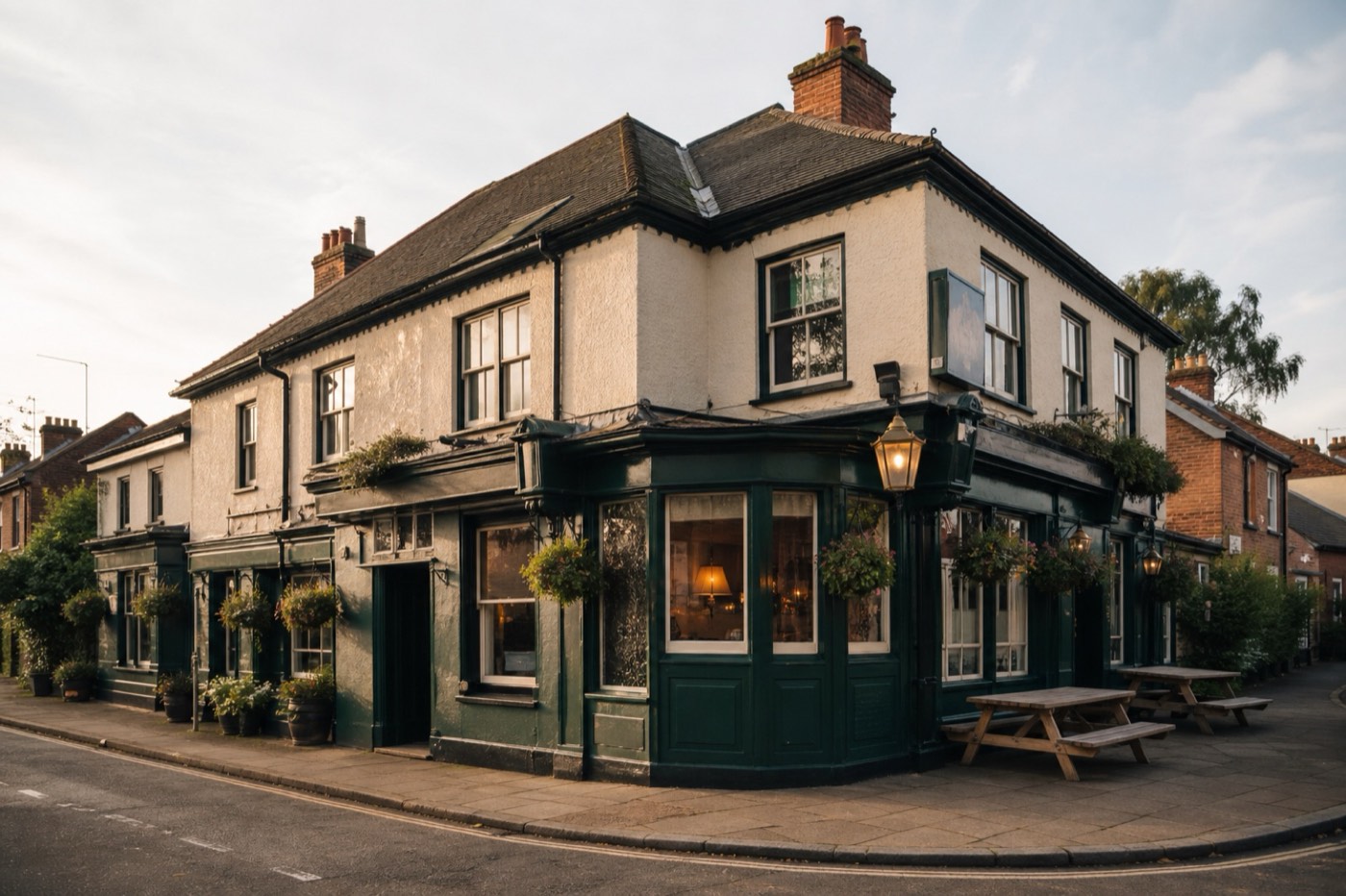
Wet-led community pubs earn the bulk of their turnover from drink rather than food: cask and keg beer, lager, wines, spirits and soft drinks across the bar, with food a supporting line at best. They are the traditional local, often a community hub, and they trade on regulars, footfall and atmosphere rather than a destination menu. For a lender, the appeal is a simple, low-overhead operating model; the watchpoint is that the wet-led end of the market has been in long-term structural decline, so the trade and the location have to stand up.
When we say wet-led pub finance we mean the commercial mortgage, term loan, bridging line or refinance used to buy, hold or improve the pub as a trading business. The credit decision turns on fair maintainable trade, or FMT, read through barrelage and the wet-dry split, the freehold or leasehold tenure, and whether the pub is free-of-tie or sits under a brewery or pubco tie. It does not turn on a borrower's personal income.
Because drink margins are thinner and more exposed than food, and because the sector has thinned out, lenders look hard at the maintainable volume and the catchment. A freehold local with steady barrelage, a loyal trade and a sensible cost base is fundable; a tired wet-led pub on falling volumes in a weak pitch is read cautiously and often needs more equity.
We package the trade, the barrelage and the tenure so leisure-experienced lenders can price the risk quickly, and we run the whole market as an arranger rather than approaching a single bank.
What we fund
- Freehold community locals run free-of-tie
- Wet-led pubs held under a brewery or pubco tie
- Town and village locals with a loyal regular trade
- Pubs listed as an Asset of Community Value
- Acquisition of an established wet-led free house
- Refinance or capital raising on a freehold local
Indicative terms
- Acquisition or term LTVUp to around 60 to 65% of value
- Going-concern basisSized on fair maintainable trade
- Term15 to 25 years
- Indicative rateFrom around 7.5 to 11% per annum
- Key testsBarrelage, wet-dry split, free-of-tie, catchment
- BridgingAround 0.8 to 1.5% per month for short-dated needs
- RepaymentCapital and interest or part interest only
Indicative only. Terms vary by lender, operator and pub and are not an offer of finance.
How we fund wet-led community pubs
We fund wet-led pubs on their going-concern trade. For an acquisition or term refinance we model the fair maintainable trade, read it through barrelage and the wet-dry split, and place the request with leisure-experienced lenders on a commercial mortgage or term loan to around 60 to 65% of value, typically over 15 to 25 years at an indicative 7.5 to 11% per annum. Because drink margins are thinner than food and the wet-led segment has thinned out, lenders weigh the maintainable volume and the catchment carefully, and a free-of-tie freehold local with steady barrelage tends to earn the keener end. Where a pub is bought at auction or needs quick completion we use bridging at an indicative 0.8 to 1.5% per month, with a term exit once the trade settles. Where the works are improvement rather than rebuild we arrange refurbishment and fit-out finance. We frame every figure as indicative and never as an offer; the terms a given pub attracts depend on its accounts, tenure, tie position and pitch.
Lender appetite for wet-led community pubs
Wet-led community pubs draw selective but genuine appetite from lenders comfortable with drink-led trade. Clearing banks lend on stabilised freehold locals with a sound trade record, challenger and specialist lenders such as OakNorth, Shawbrook, Allica Bank and Cynergy Bank fund acquisitions and refinance on fair maintainable trade, and bridging lenders provide short-dated money for auction and quick-completion purchases. Lenders favour freehold over leasehold here, because the bricks give security alongside the trade, and they read the free-of-tie position closely, since a free house keeps the wet margin that a tie would otherwise share. A listing as an Asset of Community Value, or ACV, can affect a sale or a change of use and lenders factor that in. We are an arranger and introducer with no exclusive tie to any lender, so we match the pub and the operator to the funder most likely to price it keenly rather than steering every case to one bank.
The wet-led community pub market
The wet-led market is the most exposed corner of the pub sector. Pub numbers have fallen over the long term and drink-led locals have borne much of that decline, which is why lenders read maintainable barrelage and the strength of the catchment rather than a single good year. The flip side is that a well-located freehold local with a loyal trade is a resilient cash business with a low cost base, and the freehold carries an underlying bricks-and-mortar value that can support alternative use where the trade no longer works. That underpin matters to a lender: where a pub is listed as an Asset of Community Value or sits in a use class that restricts change of use, the alternative-use exit narrows, so we present the tenure, the listing position and the going-concern trade together so the case is funded on a realistic view of both the trade and the underlying asset.
Finance that suits this pub type
- Pub acquisition financeThe core route for buying a freehold or leasehold wet-led local on its going-concern trade.
- Pub refinance and capital raisingRe-prices debt or releases equity once a community local trades steadily.
- Pub bridging financeFunds auction and quick-completion purchases ahead of a term exit.
- Pub refurbishment and fit-out financeFunds cellar, bar and trade-area works that lift the wet trade.
Fund a wet-led pub home
A view on fundability within one working day.
What drives a wet-led community pub's numbers
A wet-led pub's value to a lender comes down to fair maintainable trade, built from barrelage and a wet-dry split that leans heavily on drink, then net of a low, owner-controllable overhead. The decisive figures are the maintainable barrelage and the catchment behind it, because drink margins are thinner than food and the wet-led segment has been in long-term decline, so a single good year matters less than a steady, defensible volume. The tie position is central: a free-of-tie pub keeps the full wet margin, while a tied pub trades a lower beer margin for a lower rent. The freehold underpin matters too, because the bricks carry value even where the trade softens, though an Asset of Community Value listing or a restrictive use class can narrow the alternative-use exit. We model the fair maintainable trade across a full year and weigh the tenure and the tie, because that is what supports the debt.
Indicative wet-led community pub leverage and rates
Indicatively we arrange wet-led acquisition or term lending to around 60 to 65% of value, over 15 to 25 years, at around 7.5 to 11% per annum, sized on the fair maintainable trade. A free-of-tie freehold local with steady barrelage and a loyal catchment earns the keener end; a tied tenancy, falling volumes or a weak pitch pull leverage back and may call for more equity. Auction and quick-completion purchases run on bridging at an indicative 0.8 to 1.5% per month with a term exit, and improvement works on refurbishment and fit-out finance. These are market-typical figures, framed as indicative and never as an offer; the terms a given pub attracts depend on its barrelage, tie position, tenure and pitch, and we run the market to find them. Lenders such as OakNorth, Shawbrook, Allica Bank, Cynergy Bank and the clearing banks each read drink-led trade differently, so the fit matters.
Frequently asked questions
How much deposit do I need to buy a wet-led community pub?
On a going-concern freehold acquisition we typically arrange lending to around 60 to 65% of value, so a deposit of 35 to 40% plus working capital is a realistic working assumption. Drink-led pubs sit at the more cautious end of leverage because margins are thinner and the segment has declined, so the exact figure depends on barrelage, the wet-dry split, the tie position and the catchment. We size each case individually and present the leverage as indicative, not an offer.
What is fair maintainable trade and how do lenders use it?
Fair maintainable trade, or FMT, is the level of turnover and profit a reasonably competent operator could expect to sustain from the pub, rather than the figure the current licensee happens to be running. Lenders and valuers build FMT from barrelage, the wet-dry split and the local market, then size lending against the going-concern value it supports. We present the trade so the FMT is read fairly.
Does being free-of-tie help me borrow against a wet-led pub?
Generally yes. A free-of-tie pub buys its drink at market prices and keeps the full wet margin, where a tied pub takes beer from a brewery or pubco at set prices in return for a lower rent. Because the wet margin is the heart of a drink-led pub, a free-of-tie freehold local usually presents a stronger and more flexible earnings story, which can support keener terms.
How does an Asset of Community Value listing affect finance?
An Asset of Community Value, or ACV, listing gives the community a right to bid if the pub is sold and can make a change of use harder. It does not stop a sale or a mortgage, but it can narrow the alternative-use exit a lender might otherwise rely on, so lenders factor it into how they view the underlying asset. We flag any ACV position up front so the case is presented honestly.
Can I get bridging to buy a wet-led pub at auction?
Yes. Where a pub is bought at auction or needs a quick completion we arrange bridging at an indicative 0.8 to 1.5% per month against the property, with the exit onto a term commercial mortgage once the trade settles and the going-concern position is clear. We line up the term exit from the outset so the bridge has a defined way out.
Funding a wet-led pub home?
Tell us about the home and the operator and we will come back with a view on fundability and likely terms.