Country and destination pub finance
We arrange commercial finance for operators, buyers, investors and developers acquiring, refinancing or developing country and destination pubs. This is business lending against a trading pub, not a personal mortgage.
Funding country pub
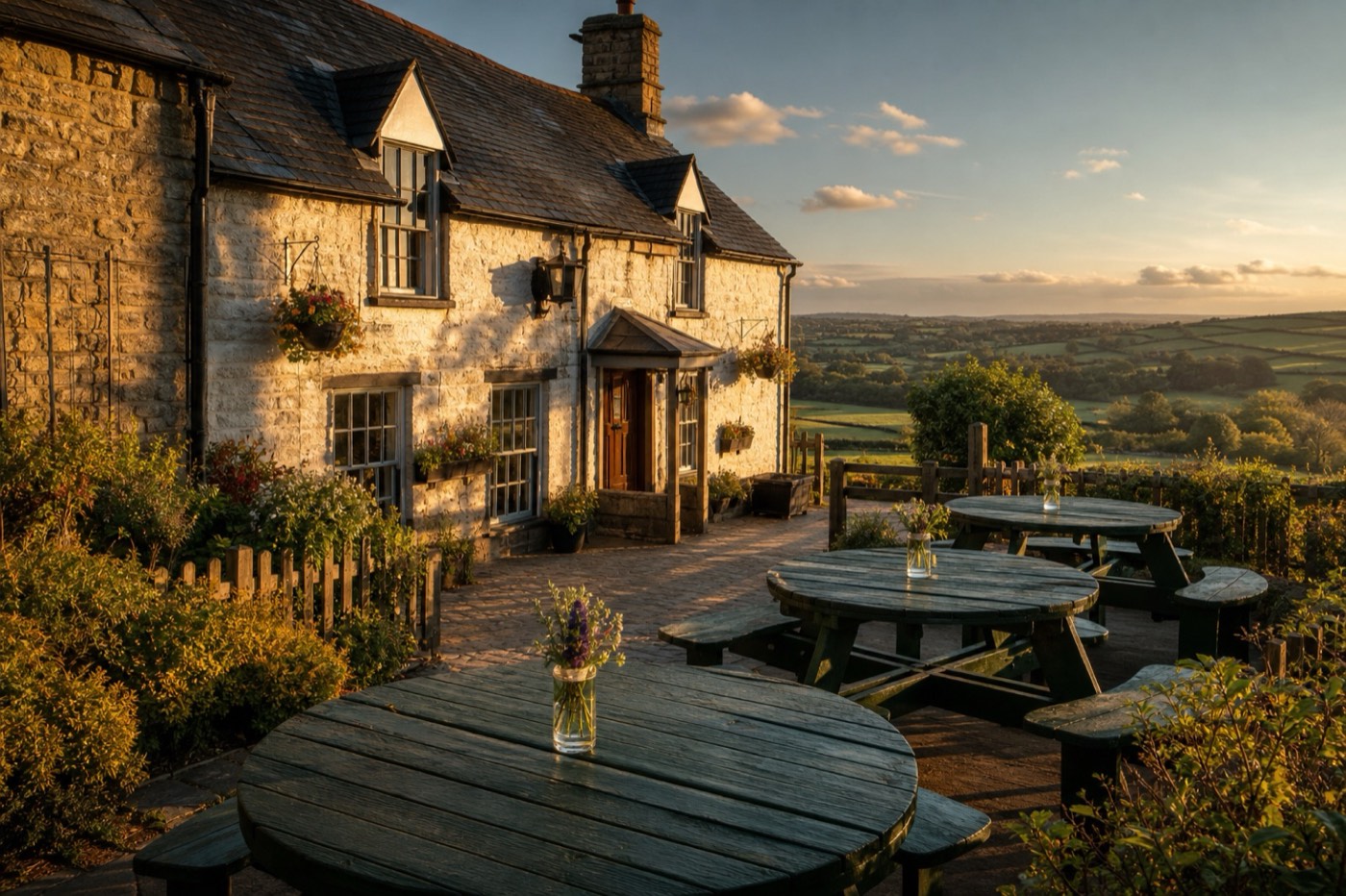
Country and destination pubs draw guests for the place rather than the passing trade. They sit in rural or village settings, often food-led, frequently with a garden, car park, and sometimes letting rooms, and people travel to them for the food, the setting or the reputation. That destination pull is a strength: spend per head and dwell time are higher than a local. But it comes with a wide catchment that depends on cars and weather, and pronounced seasonality, the two features that most shape how a lender underwrites a country pub.
When we say country pub finance we mean the commercial mortgage, term loan, development line, bridging facility or refinance used to fund the pub as a trading business. Lenders read it through the fair maintainable trade, the wet-dry split, the breadth and reliability of the catchment, the seasonality of the trade, the freehold or leasehold tenure, and the operator behind it, sizing the loan on the going-concern earnings rather than personal income.
Because destination trade peaks in summer and on weekends and thins in winter, lenders model the trough as well as the peak, and they weigh how much of the trade is genuine destination demand against passing footfall. A freehold country pub with a strong food reputation, a settled team and a proven catchment carries a sound earnings story; one reliant on fair-weather trade or a single season is read more cautiously.
We present the trade, the catchment and the seasonality so leisure-experienced lenders can price the risk, structure development and fit-out money where a site is being improved, and run the whole market as an arranger.
What we fund
- Food-led destination pubs in rural and village settings
- Country pubs with gardens, car parking and letting rooms
- Freehold destination free houses on their own land
- Development of accommodation or covers at a country site
- Acquisition of an established destination pub
- Refinance or capital raising on a freehold country pub
Indicative terms
- Acquisition or term LTVUp to around 60 to 65% of value
- Going-concern basisSized on fair maintainable trade
- Term15 to 25 years
- Indicative rateFrom around 7.5 to 11% per annum
- Development or conversionAround 60 to 65% of cost
- Key testsCatchment, seasonality, wet-dry split, operator
- BridgingAround 0.8 to 1.5% per month where needed
Indicative only. Terms vary by lender, operator and pub and are not an offer of finance.
How we fund country and destination pubs
We fund country pubs on their going-concern trade, with close attention to catchment and seasonality. For an acquisition or term refinance we model the fair maintainable trade, read it through the wet-dry split and the breadth of the catchment, stress it for the seasonal swing between a busy summer and a quiet winter, and arrange a commercial mortgage or term loan to around 60 to 65% of value over 15 to 25 years at an indicative 7.5 to 11% per annum. A freehold destination pub with a strong food reputation, a settled team and a proven catchment earns the keener end; a fair-weather or single-season trade is underwritten more cautiously. Where a country site is being improved, with letting rooms added or covers extended, we arrange development and fit-out finance to around 60 to 65% of cost, with a term exit once the works settle, and bridging at an indicative 0.8 to 1.5% per month where a site needs securing quickly. Every figure is indicative and never an offer; the terms depend on the trade, the catchment and the seasonality.
Lender appetite for country and destination pubs
Country and destination pubs draw appetite from lenders comfortable with food-led rural trade and a wide catchment. Clearing banks back established, profitable freehold destination pubs, challenger and specialist lenders such as OakNorth, Shawbrook, Allica Bank and Cynergy Bank fund acquisitions and refinance on fair maintainable trade, and development lenders back schemes that add rooms or covers to a country site. Because destination trade is seasonal and depends on a catchment that travels, lenders weigh how reliable that demand is across the year and how much is genuine destination pull rather than fair-weather footfall, and they size debt service to hold through the winter trough. Freehold and the underlying land value support keener terms. As an arranger and introducer with no exclusive tie, we match the pub, the catchment and any development to the lenders most comfortable with rural destination trade, and we structure the seasonal cash flow into the case.
The country and destination pub market
Destination pubs have done well as dining out in the countryside has held up, because a strong setting and a reputation for food pull a catchment that a town local cannot reach. That makes a well-run country pub a saleable going concern with a buyer pool of operators, small groups and lifestyle purchasers, and the freehold land often carries a meaningful underlying value, particularly where there is scope to add accommodation or extend the site. The watchpoint for a lender is seasonality and reliance on cars and weather: the trade swings through the year and a soft summer bites. A freehold destination pub with a durable catchment, a settled team and room to grow the offer is a resilient asset that lenders can underwrite on both the going concern and the land. We present the trade, the catchment, the seasonality and the development scope so the case is funded on a realistic view of all of them.
Finance that suits this pub type
- Pub acquisition financeThe core route for buying a freehold or leasehold destination pub on its going-concern trade.
- Gastropub and restaurant-with-rooms financeFunds food-led destination pubs, including those with letting rooms.
- Pub development and conversion financeFunds adding rooms or covers to a country site through to a stabilised exit.
- Pub refinance and capital raisingRe-prices debt or releases equity once a destination pub trades through a full year.
- Pub refurbishment and fit-out financeFunds garden, kitchen and trade-area works that lift the destination offer.
Fund a country pub home
A view on fundability within one working day.
What drives a country pub's numbers
A country or destination pub trades on its setting and reputation, so its economics turn on the breadth and reliability of a catchment that travels, the spend per head a destination draws, and the seasonality of the trade. The decisive figures for a lender are the fair maintainable trade across a full year, the wet-dry split, how much of the trade is genuine destination demand against fair-weather footfall, and the freehold land value behind the going concern. Because destination trade peaks in summer and on weekends and thins in winter, the margin swings through the year, so a country pub is underwritten on the trough as much as the peak. A freehold destination pub with a durable catchment, a settled team and a strong food reputation converts its pull into resilient earnings; one reliant on a single season or good weather bites harder in a soft spell. We model the maintainable trade across the year and stress the seasonal cash flow, because that is the realistic picture a lender funds.
Indicative country pub leverage and rates
Indicatively we arrange country and destination acquisition or term lending to around 60 to 65% of value, over 15 to 25 years, at around 7.5 to 11% per annum, sized on the fair maintainable trade and structured around the seasonal cash flow. A freehold destination pub with a proven catchment, a settled team and a strong reputation earns the keener end; a fair-weather or single-season trade is underwritten more cautiously. Adding rooms or covers to a country site runs on development and conversion finance to around 60 to 65% of cost, with a term exit once the new trade settles, and bridging at an indicative 0.8 to 1.5% per month where a site needs securing quickly. These are market-typical, indicative figures and never an offer; the terms depend on the catchment, the seasonality, the wet-dry split, the tenure and the operator, and we run the acquisition, development and term market across lenders such as OakNorth, Shawbrook, Allica Bank, Cynergy Bank and the clearing banks.
Frequently asked questions
How do lenders treat seasonality in a country pub?
Seasonality is central to the underwrite. A destination pub's trade peaks in summer and on weekends and thins in winter, so lenders model the fair maintainable trade across a full year, not a single strong period, and size debt service to hold through the trough as well as the peak. We present the seasonal trade clearly so the facility is structured to be sustainable across the low season.
Can I finance a country pub that wants to add letting rooms?
Yes. Where a country site has scope to add accommodation or extend the covers we arrange development and conversion finance to around 60 to 65% of cost, with the exit onto a term commercial mortgage once the new trade settles. Adding rooms can diversify a seasonal food trade with a higher-margin accommodation income, which lenders often view favourably. We line up the development and the term exit from the outset.
Does the land and setting add to what I can borrow?
It can. A freehold country pub on its own land carries an underlying bricks-and-land value alongside the going-concern trade, and where there is scope to develop, that adds to the security a lender can look to. Lenders still size the core facility on the fair maintainable trade, but the freehold land underpins the case and can support keener terms than a leasehold equivalent.
How much deposit do I need for a destination pub?
As a working assumption, lenders advance to around 60 to 65% of value on the going-concern trade, so plan for a deposit of 35 to 40% plus working capital. The exact figure depends on the catchment, the seasonality, the wet-dry split, the tenure and the operator. We size each case individually and present the leverage as indicative, not an offer.
What makes a country pub fundable to a lender?
A proven, reliable catchment, a strong food or destination reputation, a settled team, freehold tenure and a trade that holds up across the year rather than just in summer. Lenders look for genuine destination pull rather than fair-weather footfall, and for an operator who can run a multi-stream rural business. We present those factors so the case is read on its real strengths.
Funding a country pub home?
Tell us about the home and the operator and we will come back with a view on fundability and likely terms.