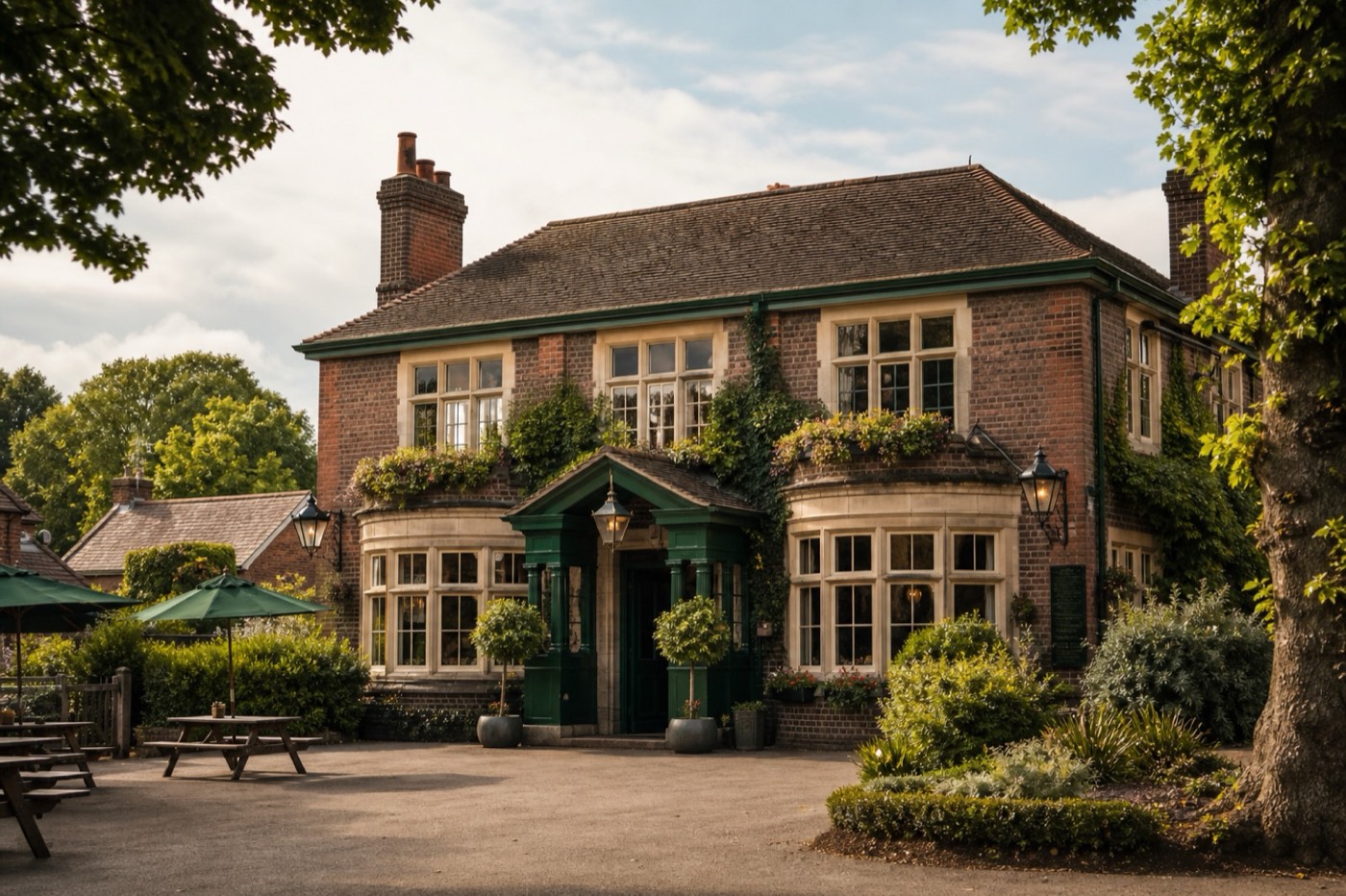
Freehold free house finance
We arrange commercial finance for operators, buyers and investors acquiring or refinancing freehold free houses. This is business lending against a trading pub you own outright and run free-of-tie, not a personal mortgage.
Funding free house
A freehold free house is the strongest tenure in the pub sector: you own the bricks outright and you run free-of-tie, buying your drink at market prices rather than from a brewery or pubco. That combination gives a lender two things at once, a bricks-and-mortar asset to secure against and a going-concern trade that keeps the full wet and dry margin, which is why freehold free houses attract the keenest leverage and pricing we arrange.
When we say free house finance we mean the commercial mortgage, term loan, bridging line or refinance used to buy, hold or release capital from the pub as a trading business. Lenders read it through both the bricks-and-mortar value and the fair maintainable trade, the wet-dry split, and the operator, sizing the loan on the going-concern value the freehold and the free-of-tie trade support together, not on personal income.
Because there is no tie and no landlord, the free house keeps the full margin and the full flexibility: the operator chooses the drink range, sets the prices, and is not paying rent to a pubco or buying beer above market. That makes the trade cleaner to underwrite and the earnings fuller, and it gives a refinance real scope to release equity where the pub has grown in value or paid down debt.
We present the freehold value, the free-of-tie trade and the operator so leisure-experienced lenders can price the risk at the keen end, and we run the whole market as an arranger rather than approaching a single bank.
What we fund
- Freehold free houses run free-of-tie
- Wet-led and food-led freehold pubs under single ownership
- Freehold pubs with development or alternative-use upside
- Acquisition of an established freehold free house
- Refinance to re-price debt or release equity
- Capital raising against a freehold pub for reinvestment
Indicative terms
- Acquisition or term LTVUp to around 65 to 70% of value
- BasisBricks-and-mortar plus going-concern trade
- Term15 to 25 years
- Indicative rateFrom around 7 to 10% per annum
- Tie positionFree-of-tie, keeping the full wet and dry margin
- Capital raisingEquity release where value or paydown allows
- Key testsFreehold value, fair maintainable trade, operator
Indicative only. Terms vary by lender, operator and pub and are not an offer of finance.
How we fund freehold free houses
We fund freehold free houses on the bricks and the trade together. For an acquisition or term refinance we weigh the freehold bricks-and-mortar value alongside the fair maintainable trade, read the free-of-tie wet and dry margin, and arrange a commercial mortgage or term loan to around 65 to 70% of value over 15 to 25 years at an indicative 7 to 10% per annum. Because the freehold gives the lender real security and the free-of-tie trade keeps the full margin, freehold free houses sit at the keener end of pub leverage and pricing. A refinance has good scope to release equity where the pub has grown in value or the debt has paid down, freeing capital for reinvestment or a second site, and we size that against the going-concern value the freehold supports. Where a purchase needs quick completion or an auction is involved we use bridging at an indicative 0.8 to 1.5% per month, with a term exit. Every figure is indicative and never an offer; the terms depend on the freehold value, the trade and the operator.
Lender appetite for freehold free houses
Freehold free houses draw the broadest and most competitive appetite in the pub sector, because the freehold gives lenders bricks-and-mortar security and the free-of-tie trade keeps the full margin. Clearing banks lend on stabilised, profitable freehold free houses, challenger and specialist lenders such as OakNorth, Shawbrook, Allica Bank and Cynergy Bank fund acquisitions, refinance and capital raising on the combined bricks and going-concern value, and bridging lenders cover quick-completion and auction purchases. Because both the asset and the trade are clean, lenders can lend a touch higher and price a touch keener than on a leasehold or tied pub, and a refinance has real room to release equity. As an arranger and introducer with no exclusive tie, we match the free house and the operator to the lender most likely to lend at the keen end rather than steering every case to one bank, and we run the market on both the bricks and the trade.
The freehold free house market
Freehold free houses are the most liquid and sought-after tenure in the pub market, because a buyer gets the bricks and the freedom to trade in one purchase, with no tie to a brewery or pubco and no landlord. That widens the buyer pool to operators, investors and groups, and it gives the asset two underpins: the going-concern trade and the freehold bricks, which carry value even where the trade is repositioned or, on some sites, redeveloped to another use. For a lender, that dual underpin is the comfort: a freehold free house can be exited as a trading pub, refinanced on its growing value, or in some cases realised on its land. We present the freehold value, the free-of-tie trade and any development or alternative-use upside so the case is funded on the full strength of the asset and the going concern together.
Finance that suits this pub type
- Pub acquisition financeThe core route for buying a freehold free house on its bricks and going-concern trade.
- Pub refinance and capital raisingRe-prices debt or releases equity against a freehold pub that has grown in value.
- Pub bridging financeCovers quick-completion and auction purchases ahead of a term exit.
- Pub refurbishment and fit-out financeFunds trade-area and kitchen works that lift the trade of a free house.
Fund a free house home
A view on fundability within one working day.
What drives a freehold free house's numbers
A freehold free house gives a lender two underpins at once, so its economics turn on both the bricks-and-mortar value and the free-of-tie going-concern trade. The decisive figures are the fair maintainable trade, read through the full wet and dry margin that a free-of-tie pub keeps, and the freehold value the property carries in its own right. Because there is no tie inflating the cost of beer and no landlord taking rent, the trade is cleaner and the margin fuller than a tied or leasehold pub, which makes the earnings stronger to underwrite. The freehold also gives security beyond the takings, so a soft patch in trade is cushioned by the underlying asset value, and a refinance has real scope to release equity where the pub has grown in value or the debt has paid down. We model the fair maintainable trade and the freehold value together, because the two underpins are what let a lender lend higher and price keener.
Indicative freehold free house leverage and rates
Indicatively we arrange freehold free house acquisition or term lending to around 65 to 70% of value, over 15 to 25 years, at around 7 to 10% per annum, sized on the bricks-and-mortar value and the fair maintainable trade together. This is the keener end of pub leverage and pricing, reflecting the strength of the tenure and the free-of-tie trade. A refinance has good scope to release equity for reinvestment or a second site, and quick-completion or auction purchases run on bridging at an indicative 0.8 to 1.5% per month with a term exit. These are market-typical, indicative figures and never an offer; because both the asset and the trade are clean, the terms depend on the freehold value, the fair maintainable trade and the operator, and we run the market on both the bricks and the trade across lenders such as OakNorth, Shawbrook, Allica Bank, Cynergy Bank and the clearing banks.
Frequently asked questions
Why are freehold free houses easier to finance?
Because they give a lender two forms of comfort at once: the freehold bricks as security and a free-of-tie trade that keeps the full wet and dry margin. There is no tie inflating the cost of beer and no landlord taking rent, so the trade is cleaner and the earnings fuller, which is why freehold free houses attract the keenest leverage and pricing in the pub sector, indicatively to around 65 to 70% of value.
What does free-of-tie mean for the finance?
Free-of-tie means the pub buys its drink at market prices and is not obliged to take beer from a brewery or pubco, so it keeps the full margin on every pint and bottle. For finance, that fuller and more flexible margin makes the going-concern trade stronger and cleaner to underwrite than a tied pub, where the tie and the rent reshape the earnings. We present the free-of-tie position so the trade is read on its real margin.
Can I release equity from my freehold free house?
Yes. Where the pub has grown in value or the debt has paid down, a refinance can release equity for reinvestment, a refurbishment or a second site, sized against the going-concern value the freehold supports. Because the asset and the trade are both clean, freehold free houses have real scope for capital raising, and we run the market to keep the terms keen.
How much can I borrow against a freehold free house?
Indicatively to around 65 to 70% of value, sized on the bricks-and-mortar value and the fair maintainable trade together, over 15 to 25 years at an indicative 7 to 10% per annum. That is the keener end of pub leverage, reflecting the strength of the tenure and the free-of-tie trade. We present every figure as indicative, not an offer, and run the market to find the keenest fit.
Does owning the freehold protect me if the trade dips?
It helps. A freehold free house carries an underlying bricks-and-land value alongside the going-concern trade, so a lender has security beyond the takings, and the operator has an asset that holds value even if the pub is repositioned or, on some sites, considered for an alternative use. That dual underpin is part of why the tenure funds so well. We present both the bricks and the trade so the case is read on its full strength.
Funding a free house home?
Tell us about the home and the operator and we will come back with a view on fundability and likely terms.