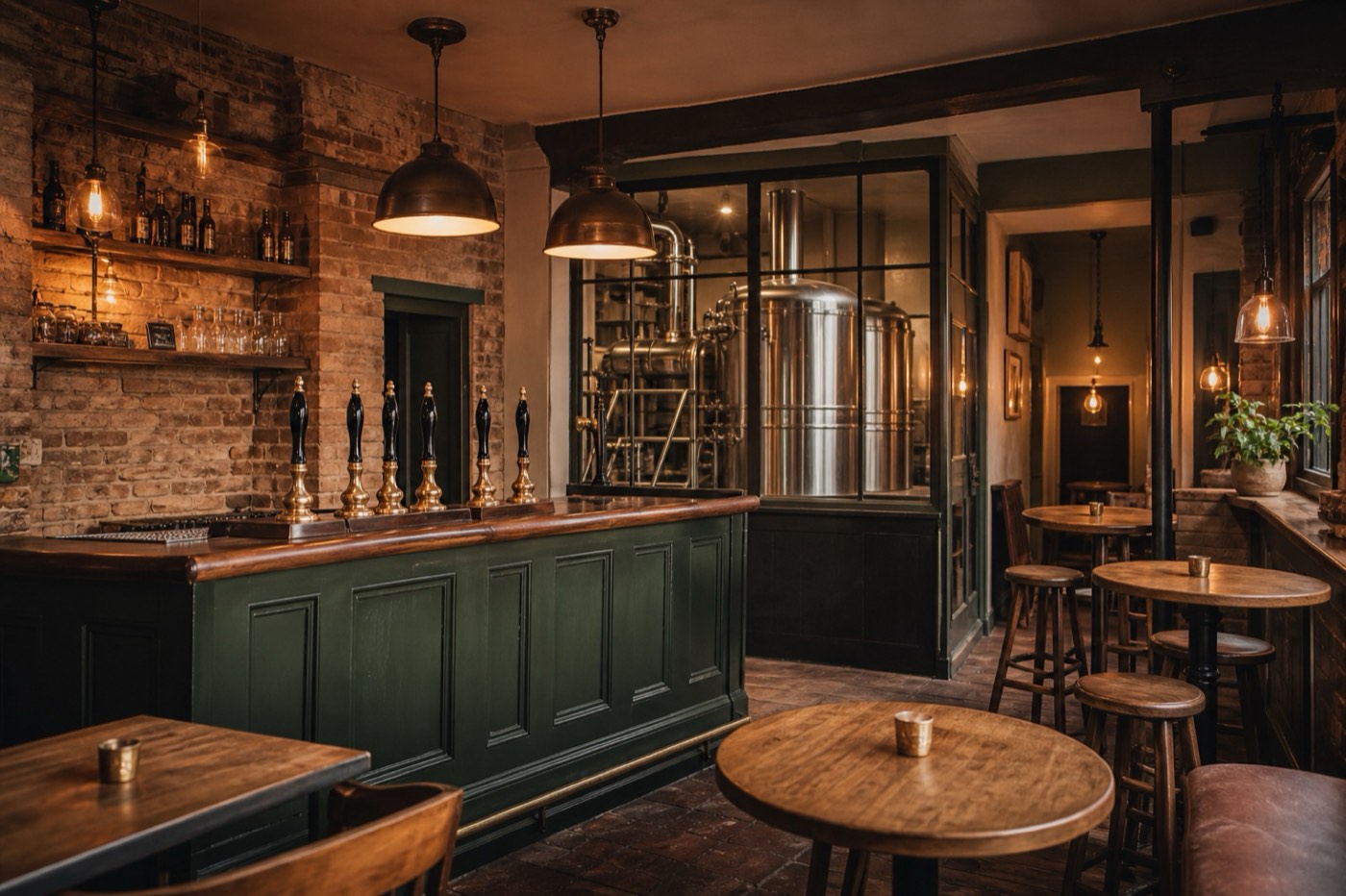
Micropub, brewpub and taproom finance
We arrange commercial finance for operators opening, fitting out or refinancing micropubs, brewpubs and taprooms. This is business lending against a small trading pub or brewery-led venue, not a personal mortgage.
Funding micropub
Micropubs, brewpubs and taprooms are the small, craft end of the sector. A micropub is a tiny, often single-room bar built around conversation and a short, well-kept range, frequently created by converting a shop or other unit. A brewpub brews its own beer on site and sells it across the bar, and a taproom is the drinking outlet attached to a brewery. They share a low-overhead, owner-run model and a craft proposition, and for a lender they are a distinctive case: small lot sizes, often leasehold, frequently involving a change of use and a piece of brewing kit.
When we say micropub or brewpub finance we mean the funding used to open, fit out, equip or refinance the venue as a trading business. The mix usually spans three things: property or lease funding for the unit, fit-out finance for the bar and trade area, and asset finance for the brewing kit and cellar equipment where the venue brews. Lenders read the going-concern trade, the lease or freehold, the change-of-use position, and the operator, sizing the lending on the maintainable trade rather than personal income.
Two features set these venues apart. First, many are conversions: a former shop or unit being brought into use as a pub, which means a change of use into the Sui Generis pub use class and often a fit-out from a bare shell. Second, brewpubs and taprooms carry brewing equipment, which is usually funded on asset finance secured against the kit itself, separate from the property facility.
We present the trade, the lease or freehold, the planning and the equipment so the right mix of property, fit-out and asset finance can be arranged, and we run the whole market as an arranger.
What we fund
- Micropubs converting a shop or unit to a small bar
- Brewpubs brewing and selling their own beer on site
- Taprooms attached to a microbrewery
- Change of use of retail units to a pub use
- Brewing-kit and cellar-equipment asset finance
- Fit-out and working capital for a craft venue opening
Indicative terms
- BasisProperty or lease, fit-out and brewing-kit asset finance
- Property LTVUp to around 60 to 65% of value where freehold
- EquipmentAsset finance secured against the brewing kit
- Indicative rateFrom around 8 to 14% per annum across the mix
- Change of useFunded where a unit is converted to a pub
- Key testsTrade, lease or freehold, planning, operator
- BridgingAround 0.8 to 1.5% per month for conversions
Indicative only. Terms vary by lender, operator and pub and are not an offer of finance.
How we fund micropubs, brewpubs and taprooms
We fund these venues with a mix of property, fit-out and asset finance matched to the small, craft model. Where the unit is freehold, we arrange a commercial mortgage on the going-concern trade to around 60 to 65% of value; where it is leasehold, which is common, we fund the lease, the fit-out and the working capital on the trade and the lease terms. Many micropubs and taprooms are conversions of a former shop or unit, so we arrange development and conversion finance for the change of use into the Sui Generis pub use class and the fit-out from a bare shell, with bridging at an indicative 0.8 to 1.5% per month where the unit needs securing first. For brewpubs and taprooms, the brewing kit and cellar equipment are usually funded on asset finance secured against the kit itself, separate from the property facility, which keeps the property lending focused on the bricks or lease and spreads the cost of the equipment. Across the mix, indicative pricing runs from around 8 to 14% per annum. Every figure is indicative and never an offer; the terms depend on the trade, the tenure, the planning and the operator.
Lender appetite for micropubs, brewpubs and taprooms
Micropubs, brewpubs and taprooms draw appetite from a specialist field, because the lot sizes are small, many are leasehold, and the equipment and change of use need lenders who understand the model. Specialist leisure and trade-business lenders and some challenger banks such as Allica Bank fund the property or lease and the working capital on the going-concern trade, asset finance houses fund the brewing kit and cellar equipment against the equipment itself, and bridging and development lenders back conversions and change-of-use schemes. Lenders weigh the maintainable trade against the low overhead of the model, the lease or freehold, the planning and change-of-use position, and the operator, who in a small owner-run venue carries much of the case. As an arranger and introducer with no exclusive tie, we assemble the property, fit-out and asset finance from the lenders most comfortable with each piece, rather than expecting one lender to fund the whole.
The micropub, brewpub and taproom market
Micropubs and taprooms have grown as the craft and independent end of the market has expanded, taking advantage of low overheads, small footprints and a loyal following for well-kept, distinctive beer. They are cheap to enter relative to a full pub, which widens the operator pool, and many occupy converted retail units that were brought into pub use, so the planning and change-of-use position is part of how the asset is read. The watchpoints for a lender are scale and reliance on the operator: turnover is modest, the venue is usually owner-run, and a brewpub adds the production risk of brewing alongside retailing. The exit is typically a sale of the going concern and the lease, or of the freehold and equipment where owned, to another craft operator. We present the trade, the tenure, the planning and the brewing kit so the case is funded and exited on a realistic view of a small, craft-led business.
Finance that suits this pub type
- Microbrewery, brewpub and taproom financeThe core route for funding brewpubs, taprooms and the brewing kit behind them.
- Pub development and conversion financeFunds change of use and fit-out of a unit into a micropub or taproom.
- Pub bridging financeSecures a conversion unit quickly ahead of a fit-out and term exit.
- Pub acquisition financeFunds the purchase of a freehold or leasehold craft venue on its going-concern trade.
- Pub refurbishment and fit-out financeFunds bar and trade-area fit-out for a craft venue opening.
Fund a micropub home
A view on fundability within one working day.
What drives a micropub or brewpub's numbers
Micropubs, brewpubs and taprooms run a small, low-overhead, craft-led model, so their economics turn on a modest but loyal trade, a tight cost base, and the operator who usually runs the venue hands-on. The decisive figures for a lender are the fair maintainable trade against the low overhead, the lease or freehold tenure, the planning and change-of-use position where the unit was converted, and the cost and value of any brewing kit. Because the lot sizes are small and the venue is owner-run, the operator carries much of the case, and a brewpub adds the production risk of brewing alongside retailing. The funding usually splits three ways: property or lease, fit-out, and asset finance for the brewing kit secured against the equipment. We model the maintainable trade against the overhead and weigh the planning and the equipment, because a craft venue is funded as a mix rather than a single facility.
Indicative micropub, brewpub and taproom leverage and rates
Indicatively we arrange property funding on a freehold craft venue to around 60 to 65% of value, fund the lease, fit-out and working capital where leasehold, and fund the brewing kit on asset finance secured against the equipment, with indicative pricing across the mix from around 8 to 14% per annum. Conversions of a former shop or unit into a pub run on development and conversion finance for the change of use into the Sui Generis pub use class and the fit-out, with bridging at an indicative 0.8 to 1.5% per month where a unit needs securing first. These are market-typical, indicative figures and never an offer; because the model splits property, fit-out and equipment, the terms depend on the trade, the tenure, the planning and the operator, and we assemble the mix from the lenders most comfortable with each piece, including specialist leisure lenders, asset finance houses and challenger banks such as Allica Bank.
Frequently asked questions
How is a brewpub financed differently from a normal pub?
A brewpub usually needs three pieces of finance rather than one: property or lease funding for the venue, fit-out finance for the bar and trade area, and asset finance for the brewing kit and cellar equipment, which is secured against the equipment itself. The brewing adds a small production business alongside the bar, so we assemble the mix from the lenders comfortable with each piece rather than expecting one facility to cover it all.
Can I finance converting a shop into a micropub?
Yes. Bringing a former shop or unit into use as a pub means a change of use into the Sui Generis pub use class and usually a fit-out from a bare shell, which we fund with development and conversion finance, and bridging at an indicative 0.8 to 1.5% per month where the unit needs securing first. We present the planning and change-of-use position so the case is funded on a realistic basis, with a term exit once the venue trades.
How is brewing equipment funded?
The brewing kit, fermentation vessels and cellar equipment are usually funded on asset finance secured against the equipment itself, separate from the property or lease facility. That keeps the property lending focused on the bricks or the lease and spreads the cost of the kit over its useful life. We arrange the property, fit-out and equipment finance together so the opening is funded as a whole.
Are micropubs harder to finance because they are small?
They are a specialist case rather than a harder one. The lot sizes are small, many are leasehold, and the venue is usually owner-run, so the operator carries much of the case and the maintainable trade is read against the low overhead of the model. Specialist leisure and trade-business lenders fund them readily where the trade and the operator stack up. We match the venue to the lenders comfortable with the craft model.
Do I need change-of-use planning before lenders will fund a conversion?
The planning and change-of-use position is central to a conversion case, and lenders want to see a realistic route to a pub use before committing to the fit-out. Where planning is in place or clearly achievable, we fund the conversion and fit-out; where it is still to be secured, bridging can hold the unit while the position is resolved. We present the planning clearly so the case is funded on a realistic view.
Funding a micropub home?
Tell us about the home and the operator and we will come back with a view on fundability and likely terms.