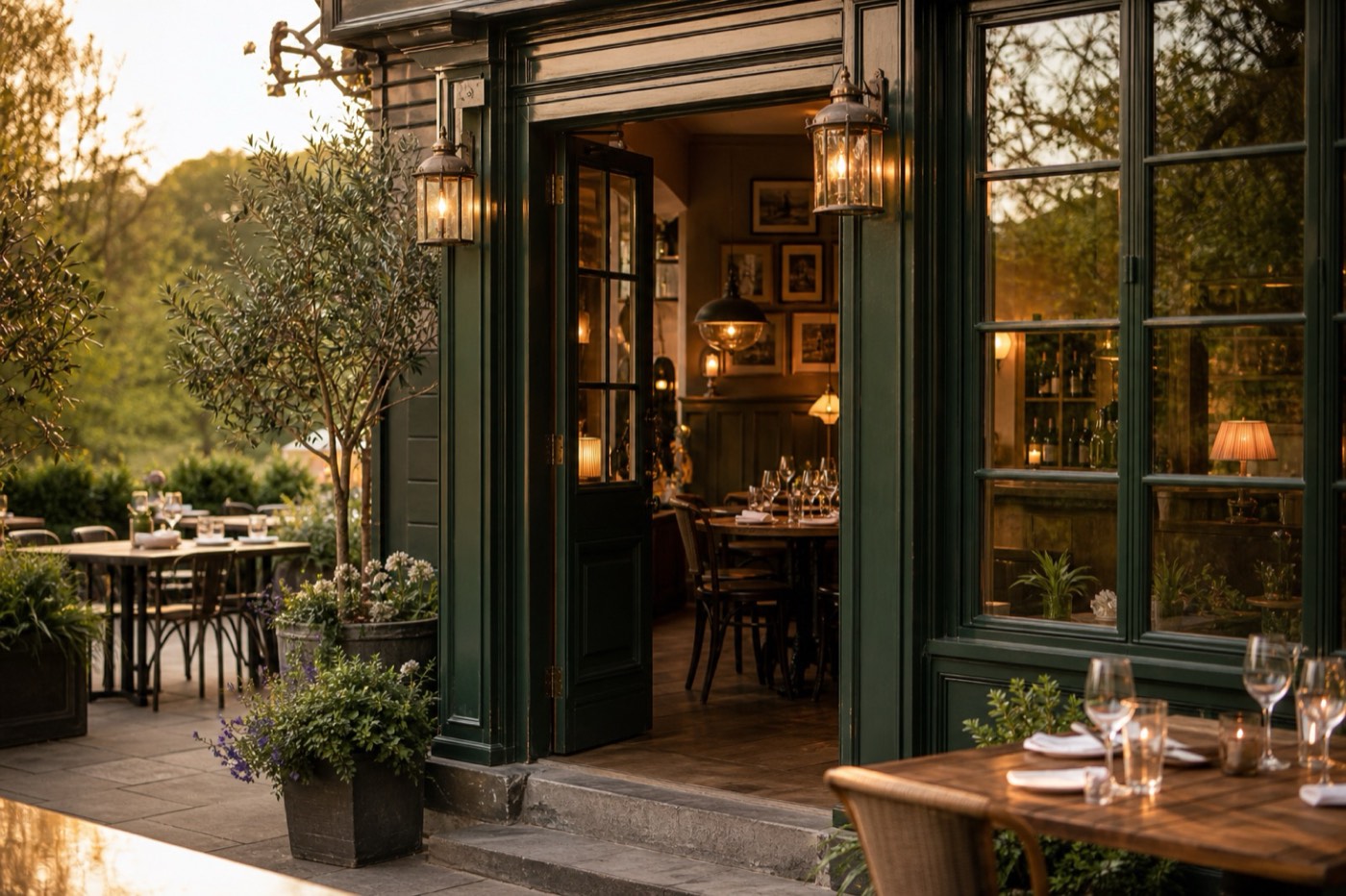
Food-led gastropub finance
We arrange commercial finance for operators, buyers, investors and developers acquiring, refinancing or fitting out food-led gastropubs. This is business lending against a trading pub-restaurant, not a personal mortgage.
Funding gastropub
Food-led gastropubs earn most of their turnover from the kitchen rather than the bar. Dining drives the trade, the drink offer supports the meal, and the proposition rests on covers, spend per head and a reputation for food. That shifts the economics: turnover and gross profit are higher than a wet-led local, but so is the cost base, with a larger kitchen brigade, food cost and a dependence on a head chef and a consistent offer. For a lender, the dry split is a strength; the watchpoint is margin and key-person risk.
When we say gastropub finance we mean the commercial mortgage, term loan, fit-out facility, development line or refinance used to fund the pub-restaurant as a trading business. The credit decision turns on fair maintainable trade read through covers and the dry-led income split, food gross margin, the freehold or leasehold tenure, and the operator behind the kitchen, not on personal income.
Gastropubs often run a value-add arc: buy a tired or under-traded pub, fund a kitchen and trade-area fit-out, then refinance onto a term loan once the food trade stabilises. That arc usually needs fit-out or refurbishment money first, sometimes bridging to secure the site, then a stabilised term exit, and the lenders for each leg can differ.
We present the food trade, the covers and the split so leisure-experienced lenders can price the risk, pre-agree the term exit where short-dated money is involved, and run the whole market as an arranger.
What we fund
- Established gastropubs with a strong food reputation
- Dry-led pub-restaurants in town and country settings
- Conversions of wet-led pubs to a food-led offer
- Kitchen and trade-area fit-out and reconfiguration
- Acquisition of a profitable food-led free house
- Refinance of a stabilised gastropub onto better terms
Indicative terms
- Acquisition or term LTVUp to around 60 to 65% of value
- Going-concern basisSized on fair maintainable trade
- Term15 to 25 years
- Indicative rateFrom around 7.5 to 11% per annum
- Fit-outKitchen and trade-area capital, often asset-backed
- Key testsCovers, spend per head, food margin, operator
- BridgingAround 0.8 to 1.5% per month where needed
Indicative only. Terms vary by lender, operator and pub and are not an offer of finance.
How we fund food-led gastropubs
We fund gastropubs on their going-concern trade, with weight on the food economics. For an acquisition or term refinance we model the fair maintainable trade, read it through covers, spend per head and the dry-led income split, test the food gross margin, and arrange a commercial mortgage or term loan to around 60 to 65% of value over 15 to 25 years at an indicative 7.5 to 11% per annum. A profitable, well-reviewed food-led pub with a settled kitchen team earns the keener end, because the higher turnover supports debt service even though the cost base is larger. Where a pub is being converted from wet-led to food-led, or a kitchen is being reconfigured, we arrange refurbishment and fit-out finance, with the catering equipment often funded on asset finance against the kit itself. Where a site needs securing quickly we use bridging at an indicative 0.8 to 1.5% per month, with a term exit once the food trade stabilises. Every figure is indicative and never an offer; the terms depend on the accounts, the covers and the operator.
Lender appetite for food-led gastropubs
Food-led gastropubs draw appetite from lenders comfortable with dining-led hospitality trade. Clearing banks lend on stabilised, profitable food-led freeholds, challenger and specialist lenders such as OakNorth, Shawbrook, Allica Bank and Cynergy Bank fund acquisitions and refinance on fair maintainable trade, asset finance houses fund the catering kit, and bridging lenders secure sites ahead of a fit-out. Because the gastropub model carries a larger cost base and depends on a consistent kitchen, lenders look closely at the covers, the food gross margin and the operator's track record, and they weigh key-person risk where the offer hangs on one chef. Freehold supports keener terms than leasehold, since the bricks add security to the trade. As an arranger and introducer with no exclusive tie, we match the pub and the operator to the lender most comfortable with food-led trade, and we line up the term exit from the outset so a fit-out scheme does not stall at refinance.
The food-led gastropub market
Food-led pubs have taken share as the wet-led end of the market has thinned, because a strong kitchen widens the catchment and lifts spend per head well beyond what drink alone delivers. That makes a profitable gastropub a more rounded and saleable going concern, valued on its fair maintainable trade rather than just its bricks. The watchpoint for a lender is margin and consistency: food cost, labour and energy press on the gross margin, and the trade can soften quickly if the kitchen team or the offer slips. A well-run food-led pub with a settled team and a clear local reputation is a liquid asset with a ready buyer pool of operators and small groups, and the freehold underpins value where the trade is freehold. We present the food trade, the margin and the tenure so the case is funded on a realistic view of both the going concern and the underlying asset.
Finance that suits this pub type
- Gastropub and restaurant-with-rooms financeThe core route for buying or refinancing a food-led pub on its dining trade.
- Pub acquisition financeFunds the purchase of a freehold or leasehold food-led pub on its going-concern trade.
- Pub refurbishment and fit-out financeFunds kitchen and trade-area fit-out that builds or lifts the food offer.
- Pub refinance and capital raisingRe-prices debt or releases equity once the food trade stabilises.
- Pub bridging financeSecures a site quickly ahead of a fit-out and a term exit.
Fund a gastropub home
A view on fundability within one working day.
What drives a gastropub's numbers
A food-led gastropub trades on the kitchen, so its economics turn on covers, spend per head and the food gross margin against a larger cost base. Turnover and gross profit run higher than a wet-led local, but the food cost, the kitchen brigade, labour and energy press on the margin, and the trade depends on a consistent offer and often a head chef. The decisive figures for a lender are the fair maintainable trade read through covers and the dry-led split, the maintainable food gross margin, and the durability of the offer beyond any single individual. A profitable, well-reviewed gastropub with a settled team converts higher turnover into a margin that comfortably services debt; a volatile or key-person-dependent trade is read more cautiously. We model the fair maintainable trade through the covers and the food margin, because that is what a lender lends against, not the headline takings alone.
Indicative gastropub leverage and rates
Indicatively we arrange food-led acquisition or term lending to around 60 to 65% of value, over 15 to 25 years, at around 7.5 to 11% per annum, sized on the fair maintainable trade. A profitable, well-reviewed freehold gastropub with a settled kitchen team earns the keener end; a thin or volatile food record, or leasehold tenure, pulls leverage back. Conversions from wet-led to food-led and kitchen reconfigurations run on refurbishment and fit-out finance, with the catering kit often funded on asset finance against the equipment, and bridging at an indicative 0.8 to 1.5% per month where a site needs securing first. These are market-typical, indicative figures and never an offer; because lenders weigh the food margin and key-person risk alongside the covers, the terms depend on the accounts, the team and the operator, and we run the market across each leg with lenders such as OakNorth, Shawbrook, Allica Bank and the clearing banks.
Frequently asked questions
How do lenders value a gastropub?
On its fair maintainable trade as a going concern. Lenders and valuers build FMT from covers, spend per head and the dry-led income split, test the food gross margin against a competent operator, and size lending against the going-concern value that supports. Because food turnover is higher than drink but carries more cost, the maintainable margin matters as much as the headline takings. We present the trade so the FMT is read fairly.
Can finance fund a conversion from a wet-led pub to a gastropub?
Yes. Where a wet-led pub is being repositioned to a food-led offer we arrange refurbishment and fit-out finance for the kitchen and trade-area works, often with the catering equipment funded on asset finance against the kit, and bridging where the site needs securing first. The exit is onto a term commercial mortgage once the food trade stabilises, and we line the legs up from the outset.
How much can I borrow against a food-led pub?
Indicatively to around 60 to 65% of value on a freehold going-concern basis, over 15 to 25 years at an indicative 7.5 to 11% per annum, sized on the fair maintainable trade. A profitable, well-reviewed gastropub with a settled kitchen team earns the keener end; a thin or volatile food record pulls leverage back. We present every figure as indicative, not an offer, and run the market to find the keenest fit.
Do lenders worry about reliance on one chef?
They look at it. Where a gastropub's reputation and trade hang on a single head chef, lenders weigh that key-person risk and may want to see a settled team, documented systems or a track record that survives staff changes. A consistent offer that does not depend on one individual reads more strongly, and we present the team and the systems so the risk is seen in context.
Is the catering equipment financed separately?
Often, yes. The kitchen kit, cellar equipment and trade fixtures can be funded on asset finance secured against the equipment itself, which keeps the property facility focused on the bricks and trade and spreads the cost of the fit-out. We arrange the property finance and the asset finance together so the fit-out is funded as a whole.
Funding a gastropub home?
Tell us about the home and the operator and we will come back with a view on fundability and likely terms.