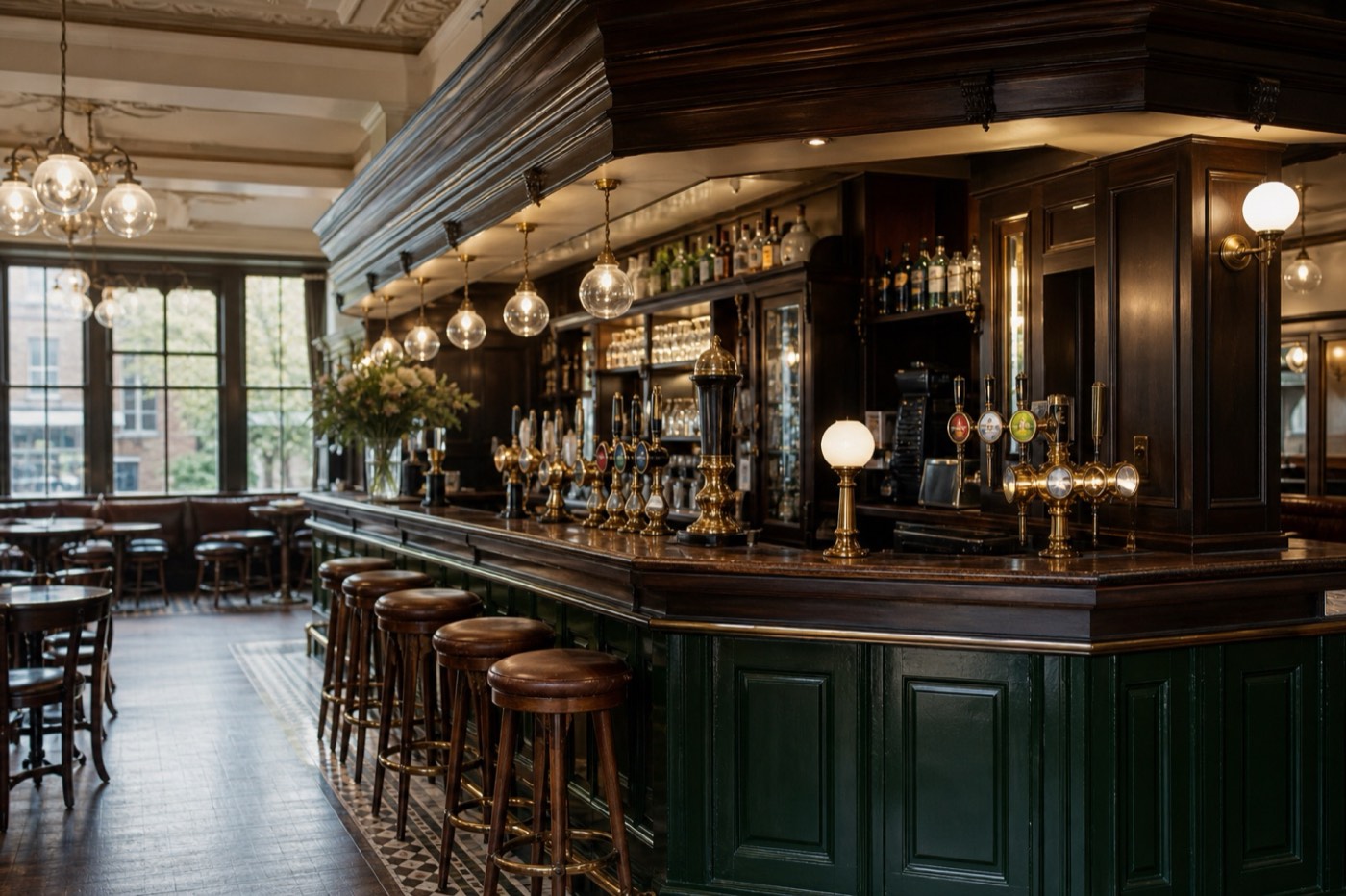
Town-centre and high-street pub finance
We arrange commercial finance for operators, buyers, investors and developers acquiring, refinancing or converting town-centre and high-street pubs. This is business lending against a trading pub, not a personal mortgage.
Funding town-centre pub
Town-centre and high-street pubs trade on footfall: shoppers, workers, evening and late-night drinkers, and a mix of wet and food trade that shifts with the location. The pitch is everything. A pub on a busy high street or near offices and transport captures passing trade a rural pub never sees, but it pays for it in higher rent, business rates and staffing, and it competes with bars, restaurants and the wider night-time economy. For a lender, the footfall is the draw; the watchpoints are occupancy cost and the pressure on town-centre property.
When we say town-centre pub finance we mean the commercial mortgage, term loan, bridging line, development facility or refinance used to fund the pub as a trading business. Lenders read it through the fair maintainable trade, the wet-dry split, the strength of the pitch and the footfall, the rent and rates burden, the freehold or leasehold tenure, and the operator, sizing the loan on the going-concern earnings rather than personal income.
Town-centre pubs carry a distinctive feature: the property often has an alternative-use value. Many sit in a use class where a change of use to retail, leisure or residential is possible, and a former pub on a prime high-street pitch can be worth more in another use than as a going concern. That cuts both ways for a lender. It provides an underlying asset value, but it also means the bricks and the trade can pull in different directions, and any Asset of Community Value listing or planning restriction changes the picture.
We present the trade, the pitch, the occupancy cost and the alternative-use position so leisure-experienced lenders can price the risk, structure conversion money where a change of use is planned, and run the whole market as an arranger.
What we fund
- High-street and town-centre wet and food-led pubs
- City pubs serving office, shopper and evening trade
- Late-licence and night-time-economy pubs
- Pubs with upper floors for conversion to rooms or residential
- Change-of-use and part-conversion schemes
- Acquisition or refinance of a freehold high-street pub
Indicative terms
- Acquisition or term LTVUp to around 60 to 65% of value
- Going-concern basisSized on fair maintainable trade
- Term15 to 25 years
- Indicative rateFrom around 7.5 to 11% per annum
- Alternative useConsidered where change of use is viable
- Conversion or developmentAround 60 to 65% of cost
- Key testsFootfall, occupancy cost, tenure, alternative use
Indicative only. Terms vary by lender, operator and pub and are not an offer of finance.
How we fund town-centre and high-street pubs
We fund town-centre pubs on their going-concern trade and, where relevant, their alternative-use value. For an acquisition or term refinance we model the fair maintainable trade, read it through the wet-dry split, the footfall and the pitch, and net off the higher rent, rates and staffing a town-centre site carries, then arrange a commercial mortgage or term loan to around 60 to 65% of value over 15 to 25 years at an indicative 7.5 to 11% per annum. Because many town-centre pubs sit in a use class that allows a change of use, a former pub on a prime pitch can carry an underlying value above its trading worth, which a lender can look to as security. Where a change of use or an upper-floor conversion to rooms or residential is planned, we arrange development and conversion finance to around 60 to 65% of cost, or bridging at an indicative 0.8 to 1.5% per month to secure the site, with a term or sale exit. Every figure is indicative and never an offer; the terms depend on the trade, the occupancy cost and the alternative-use position.
Lender appetite for town-centre and high-street pubs
Town-centre and high-street pubs draw appetite from lenders comfortable with footfall-led trade and, often, with an alternative-use angle. Clearing banks lend on stabilised, profitable freehold high-street pubs, challenger and specialist lenders such as OakNorth, Shawbrook, Allica Bank and Cynergy Bank fund acquisitions and refinance on fair maintainable trade, and bridging and development lenders back change-of-use and conversion schemes where the value sits partly in the bricks. Lenders weigh the strength of the pitch, the footfall, the occupancy cost, and the planning and use-class position, because a prime town-centre pub can be worth more in another use, while an Asset of Community Value listing or a planning restriction can close that door. Freehold supports keener terms and a clearer alternative-use exit. As an arranger and introducer with no exclusive tie, we match the pub and the plan to the lender most comfortable with town-centre trade and any conversion angle.
The town-centre and high-street pub market
Town-centre pubs sit in a market shaped by two forces: the night-time economy and the value of high-street property. The footfall that makes a town-centre pub trade also makes its site attractive for other uses, and many former pubs have been converted to shops, restaurants or homes, which is why the alternative-use value is part of how a lender reads the asset. That gives a town-centre pub two possible exits: a sale as a going concern to an operator, or a sale or conversion to an alternative use where the planning allows it. The watchpoints are occupancy cost, which presses on the trading margin, and planning, since an Asset of Community Value listing or a restrictive use class can limit a change of use. We present the trade, the pitch, the occupancy cost and the planning and use-class position so the case is funded on a realistic view of both the going concern and the underlying property.
Finance that suits this pub type
- Pub acquisition financeThe core route for buying a freehold or leasehold town-centre pub on its trade.
- Pub development and conversion financeFunds change-of-use and upper-floor conversion schemes on town-centre sites.
- Pub bridging financeSecures a high-street site quickly ahead of a term or conversion exit.
- Pub refinance and capital raisingRe-prices debt or releases equity from a stabilised town-centre pub.
- Pub refurbishment and fit-out financeFunds trade-area and kitchen works that refresh a high-street offer.
Fund a town-centre pub home
A view on fundability within one working day.
What drives a town-centre pub's numbers
A town-centre or high-street pub trades on footfall, so its economics turn on the strength of the pitch, the wet-dry split, and the occupancy cost the location carries. The footfall drives turnover, but town-centre rent, business rates and staffing press on the margin, so the maintainable earnings rest on a controllable cost base as much as on the takings. The distinctive figure here is the alternative-use value: many town-centre pubs sit in a use class where a change of use is possible, and a former pub on a prime pitch can be worth more in another use than as a going concern, which gives a lender an underlying asset value to look to. That cuts both ways, because the bricks and the trade can pull in different directions, and an Asset of Community Value listing or a planning restriction can close the alternative-use door. We model the fair maintainable trade net of occupancy cost and weigh the planning and use-class position, because both shape the case.
Indicative town-centre pub leverage and rates
Indicatively we arrange town-centre acquisition or term lending to around 60 to 65% of value, over 15 to 25 years, at around 7.5 to 11% per annum, sized on the fair maintainable trade and, where relevant, the alternative-use value of the property. A profitable freehold pub on a strong pitch with a controllable occupancy cost earns the keener end; a heavy rent and rates burden the trade cannot sustain pulls terms back. Change-of-use and upper-floor conversion schemes run on development and conversion finance to around 60 to 65% of cost, or bridging at an indicative 0.8 to 1.5% per month to secure a site, with a term or sale exit. These are market-typical, indicative figures and never an offer; the terms depend on the footfall, the occupancy cost, the tenure and the planning and use-class position, and we run the market across lenders such as OakNorth, Shawbrook, Allica Bank, Cynergy Bank, the clearing banks and specialist bridging and development funders.
Frequently asked questions
Does a town-centre pub have an alternative-use value?
Often, yes. Many town-centre and high-street pubs sit in a use class where a change of use to retail, leisure or residential is possible, and a pub on a prime pitch can be worth more in another use than as a going concern. Lenders can look to that underlying value as security, though an Asset of Community Value listing or a planning restriction can limit a change of use. We present the planning and use-class position so the alternative-use angle is read accurately.
Can I finance converting the upper floors of a town-centre pub?
Yes. Where there are upper floors to convert to letting rooms or residential we arrange development and conversion finance to around 60 to 65% of cost, or bridging at an indicative 0.8 to 1.5% per month to secure the site first, with a term or sale exit once the works complete. Adding accommodation or homes above a trading pub can lift the value of the asset, and we structure the finance and the exit together.
How does high rent and business rates affect town-centre pub finance?
Lenders net the higher occupancy cost off the trade when they size the loan, because town-centre rent, business rates and staffing press on the margin even where footfall and turnover are strong. A pub on a busy pitch with a controllable cost base reads well; one carrying an occupancy cost the trade cannot sustain is underwritten cautiously. We present the cost base so the maintainable margin is seen clearly.
How much can I borrow against a high-street pub?
Indicatively to around 60 to 65% of value, sized on the fair maintainable trade and, where relevant, the alternative-use value of the property, over 15 to 25 years at an indicative 7.5 to 11% per annum. Freehold and a strong pitch support the keener end. We present every figure as indicative, not an offer, and run the market to find the keenest fit.
Will an Asset of Community Value listing stop a conversion?
Not on its own, but it matters. An Asset of Community Value listing gives the community a right to bid if the pub is sold and can make a change of use harder, which narrows the alternative-use exit a lender might otherwise rely on. It does not stop a sale or a mortgage. We flag any ACV listing and the planning position up front so the case is presented honestly.
Funding a town-centre pub home?
Tell us about the home and the operator and we will come back with a view on fundability and likely terms.